What Is an Invoice Reference Number (IRN)? A Guide
Learn what an Invoice Reference Number (IRN) means for Nigerian e-invoicing, how it's generated, why it matters, and how to quickly get IRN-ready with Zutax.
If you’ve been trying to understand Nigeria’s new e-invoicing system, you’ve probably come across the term Invoice Reference Number, or IRN, and wondered what it actually means for your business.
Here’s the good news: this guide breaks it all down.
By the end, you’ll know exactly what an IRN is, why it matters, how it is generated, and what happens if your invoices don’t have one.
What Is an Invoice Reference Number (IRN)?
An Invoice Reference Number (IRN) is a unique, system-generated code assigned to every validated electronic invoice submitted through Nigeria’s e-invoicing compliance infrastructure.
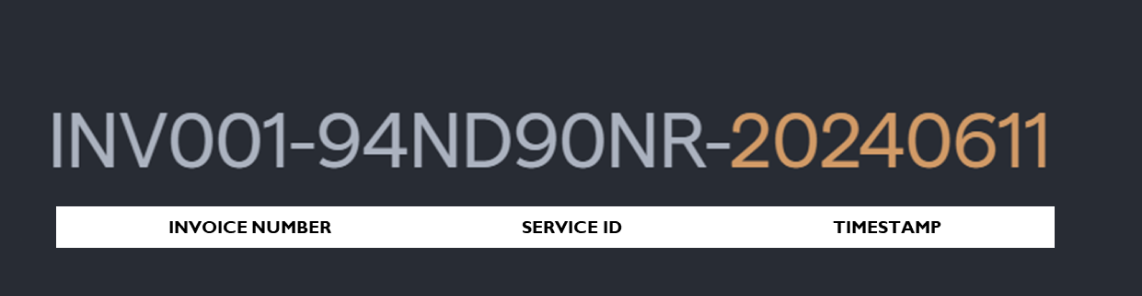
Think of it as a digital fingerprint for your invoice.
Once your invoice passes validation, the system returns an IRN along with a QR code. That combination is what makes your invoice legally compliant under Nigeria’s mandatory e-invoicing framework.
Without an IRN, your invoice is not recognized as a valid tax document.
Why Does the IRN Exist?
The NRS introduced the IRN as part of Nigeria’s Electronic Fiscal System (EFS), a broader effort to modernize tax administration, reduce VAT fraud, and close revenue leakage gaps.
Here’s what the IRN solves:
- Eliminates duplicate invoices because each transaction gets one unique, verifiable code
- Prevents invoice manipulation because once validated, invoice data is locked in the compliance record
- Enables real-time tax visibility so tax authorities can track VAT obligations as transactions happen
- Simplifies audits because every invoice has a verifiable paper trail
Before e-invoicing, businesses could issue invoices manually, edit them after the fact, or fail to report them. The IRN closes those gaps.
How Is an IRN Generated? Step by Step
Here’s how the IRN process works under Nigeria’s e-invoicing framework:
- You create an invoice in your accounting software, ERP, or a compliant invoicing platform.
- Invoice data is transmitted through the approved compliance pathway in the required structured format.
- The invoice is validated against required fields such as seller TIN, buyer TIN, invoice date, line items, and VAT amounts.
- If validation passes, a unique Invoice Reference Number and QR code are returned, typically within seconds.
- You issue the invoice to your buyer with the IRN and QR code embedded in the final document.
- The buyer can verify the invoice by scanning the QR code or checking the relevant validation record.
What Information Does an IRN Contain?
While the IRN itself appears as an alphanumeric string, the system ties it to a rich set of invoice metadata, including:
- Seller Tax Identification Number (TIN)
- Buyer TIN for B2B transactions
- Invoice date and time of transmission
- Total invoice value and VAT amount
- Invoice line items
- A cryptographic hash confirming data integrity
Tip: Tampering with the invoice after IRN issuance is immediately detectable because the QR code and validation record will no longer match.
IRN Format
An IRN is a 40-character identifier containing a timestamp, business identifier, sequential number, and check digits. You don’t need to parse this structure yourself — a compliant platform generates and returns it automatically — but it’s what makes each IRN unique, immutable, and traceable back to a specific validated submission.
IRN and Credit Notes
Because an IRN is immutable once issued, you can’t edit an invoice after the fact. Corrections go through a credit note or debit note instead, each referencing the original invoice’s IRN so the audit trail stays intact. See our full guide to credit notes and debit notes for how full and partial corrections work.
IRN vs. Regular Invoice Number: What’s the Difference?
Many business owners confuse their internal invoice numbers with the IRN. They are not the same thing.
| Feature | Internal Invoice Number | Invoice Reference Number (IRN) |
|---|---|---|
| Assigned by | Your business | Nigeria Revenue Service compliance system |
| Format | Your own numbering system | System-generated alphanumeric code |
| Required for compliance | No | Yes |
| Verifiable by buyer | No | Yes, via QR code scan |
| Appears on tax records | No | Yes, linked to the validation record |
Your internal invoice number is for your own records. The IRN is what makes your invoice legally valid in Nigeria’s tax system.
Who Needs an IRN in Nigeria?
Nigeria’s e-invoicing mandate rolled out in two phases:
| Phase | Taxpayer Category | Timeline |
|---|---|---|
| Phase 1 | Large taxpayers with turnover above NGN 5 billion | Mandatory from November 1, 2025 |
| Phase 2 | All VAT-registered businesses, including SMEs | Mandatory from January 1, 2026 |
Both deadlines have now passed — if you’re VAT-registered, IRNs aren’t a future requirement, they’re a current one. See our full rollout timeline for the complete picture, including the regulatory infrastructure milestones since.
What Happens If You Issue an Invoice Without an IRN?
Non-compliance carries serious consequences under Nigeria’s tax administration rules. Issuing a taxable transaction without a proper VAT invoice — which an IRN-less invoice effectively is — carries a penalty of 50% of the invoice value, on top of:
- Loss of input VAT credit because buyers cannot claim VAT deductions on unvalidated invoices
- Interest charges where tax obligations are underpaid or delayed
- Audit risk because operating outside the real-time system can flag your business for regulatory scrutiny
Beyond penalties, buyers increasingly expect IRN-validated invoices. Issuing non-compliant invoices can damage supplier relationships and delay payments. See our full penalties breakdown for the complete picture across all violation types, and our guide to invoice validation errors and fixes if your invoices are getting rejected before they even reach this point.
How to Get an IRN for Your Invoices
There are two main routes to IRN compliance:
Option 1: Direct Technical Integration
Connect your existing ERP or accounting system into the approved e-invoicing infrastructure via API. This is ideal for large enterprises with dedicated technical teams.
Option 2: Use an Accredited E-Invoicing Platform
Work with a compliant invoicing platform like Zutax that handles submission, validation, and IRN retrieval on your behalf. This is what many Nigerian businesses are choosing, especially those that want compliance without disrupting existing workflows.
Common IRN Mistakes Nigerian Businesses Make
1. Waiting Until Enforcement to Start
Many businesses assume they have time. But integration, testing, and staff training take longer than expected. Start early.
2. Treating IRN as an Optional Add-On
Some businesses issue invoices first, then try to get IRNs retroactively. The e-invoicing framework requires pre-validation, so your invoice must be processed before it reaches the buyer.
3. Not Informing Buyers
Your buyers need to know to look for the IRN and QR code. Educate your finance team and clients about what a compliant invoice now looks like.
4. Using an Unaccredited Third Party
Only use recognized system integrators, access providers, or compliant platforms. An unaccredited tool means your invoices may fail validation even if they look correct.
IRN and the Peppol Connection
Nigeria’s e-invoicing system is built to align with Peppol, the international e-invoicing standard used across Europe, Singapore, Australia, and growing parts of Africa.
For Nigerian businesses trading internationally, this is significant: compliance with IRN requirements also positions you for smoother e-invoicing in export markets.
Frequently Asked Questions About IRNs
Can I get an IRN for invoices I’ve already issued?
No. The pre-validation model means IRNs are issued before the invoice reaches the buyer. You cannot retroactively validate past invoices.
Does every invoice need an IRN?
Yes, for all B2B and B2G transactions once you’re in scope. B2C transactions above the applicable threshold may also require real-time e-reporting.
How long does IRN generation take?
Typically seconds, assuming your invoice data is correctly formatted and your system is properly integrated with the compliance workflow.
What if the portal or network is down?
The framework includes contingency procedures. Your platform or integrator should have protocols for handling temporary outages without compliance risk.
Can my buyer reject an invoice without an IRN?
Yes, and increasingly, buyers will. An invoice without a valid IRN may not support input VAT claims, giving buyers every reason to reject it.
What if I need to modify an invoiced transaction?
You cannot modify an invoice once it has an IRN. Instead, issue a credit note referencing the original invoice, or create a new corrected invoice — both get their own IRNs.
Do I need a separate IRN for each line item?
No. The IRN covers the entire invoice, regardless of how many line items it contains.
The Bottom Line
An Invoice Reference Number (IRN) is no longer optional for Nigerian businesses. It is the foundation of valid, tax-compliant invoicing under the NRS e-invoicing mandate.
Every in-scope B2B and B2G invoice you issue needs one, and — with both rollout deadlines now passed — that requirement already applies to your business if you’re VAT-registered.
The good news? Getting IRN-ready doesn’t have to be complicated.
Start Issuing IRN-Compliant Invoices With Zutax
Zutax is built specifically for Nigerian businesses navigating the NRS e-invoicing mandate.
- Automatic IRN generation workflow for every invoice
- Real-time validation before your invoice leaves the platform
- Seamless integration with QuickBooks, Xero, SAP, ERPNext, and Sage
- No forced migration, so you can keep your existing ERP and workflows
- QR code embedding and full audit trail for every transaction
- Free trial, no credit card required
Join Nigerian businesses already issuing standards-ready, IRN-compliant invoices.
Ready to simplify your e-invoicing?
Join hundreds of Nigerian businesses using ZUTAX for compliant invoicing.